Walk down any oil aisle in India and you will see two families of bottles. One says "cold-pressed" or "wood-pressed" or "ghani". The other says "refined". Both come from the same seed. The difference is what happened to the seed before it landed in the bottle.
How cold-pressing works
A wooden ghani is a stone-and-wood mortar with a slow-turning pestle. Historically it was turned by a bullock walking in a circle. The seed is crushed at low speed and low temperature — the whole rotation takes hours per batch. What comes off is a dark, aromatic oil that carries the flavour compounds of the seed intact.
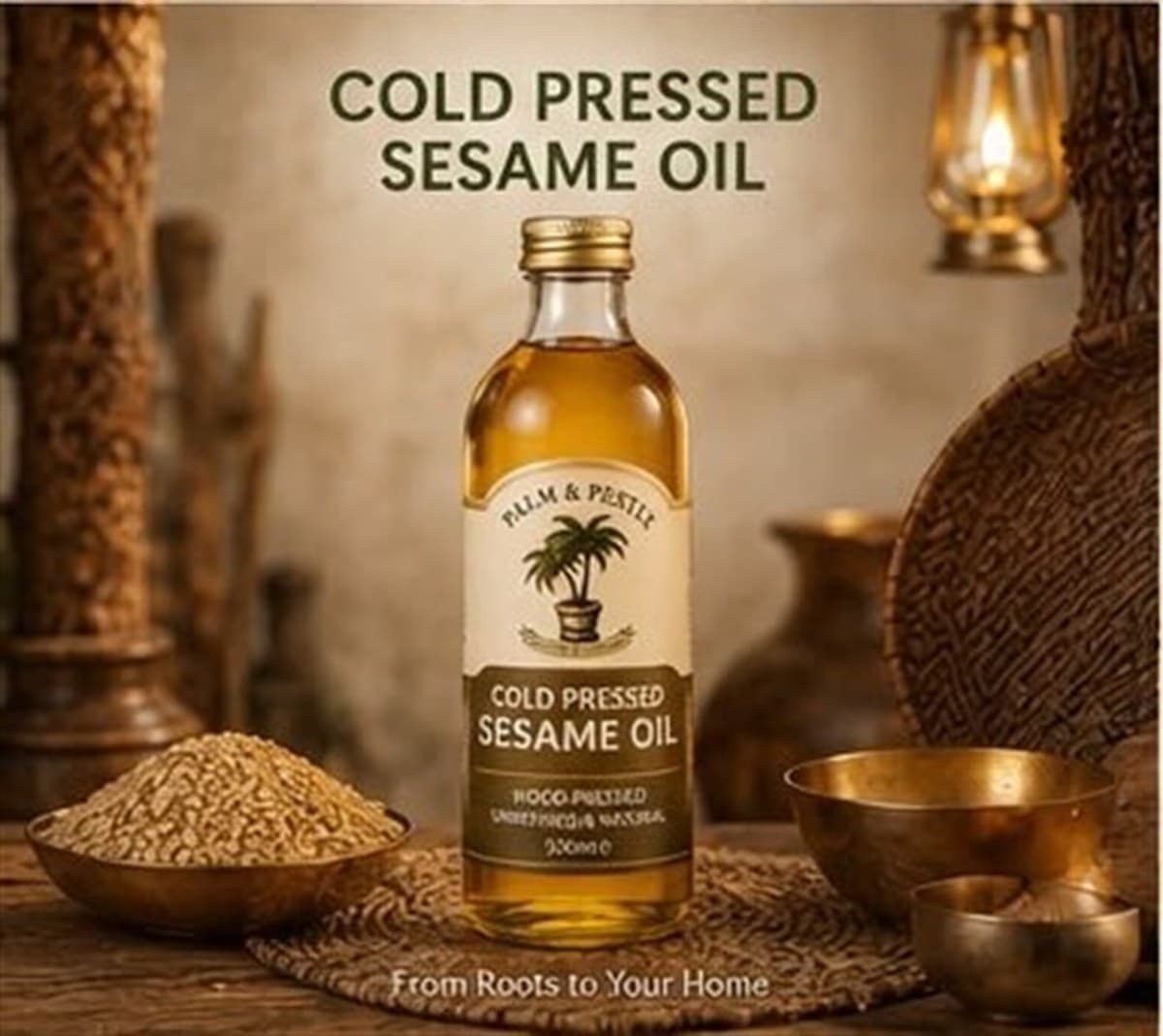
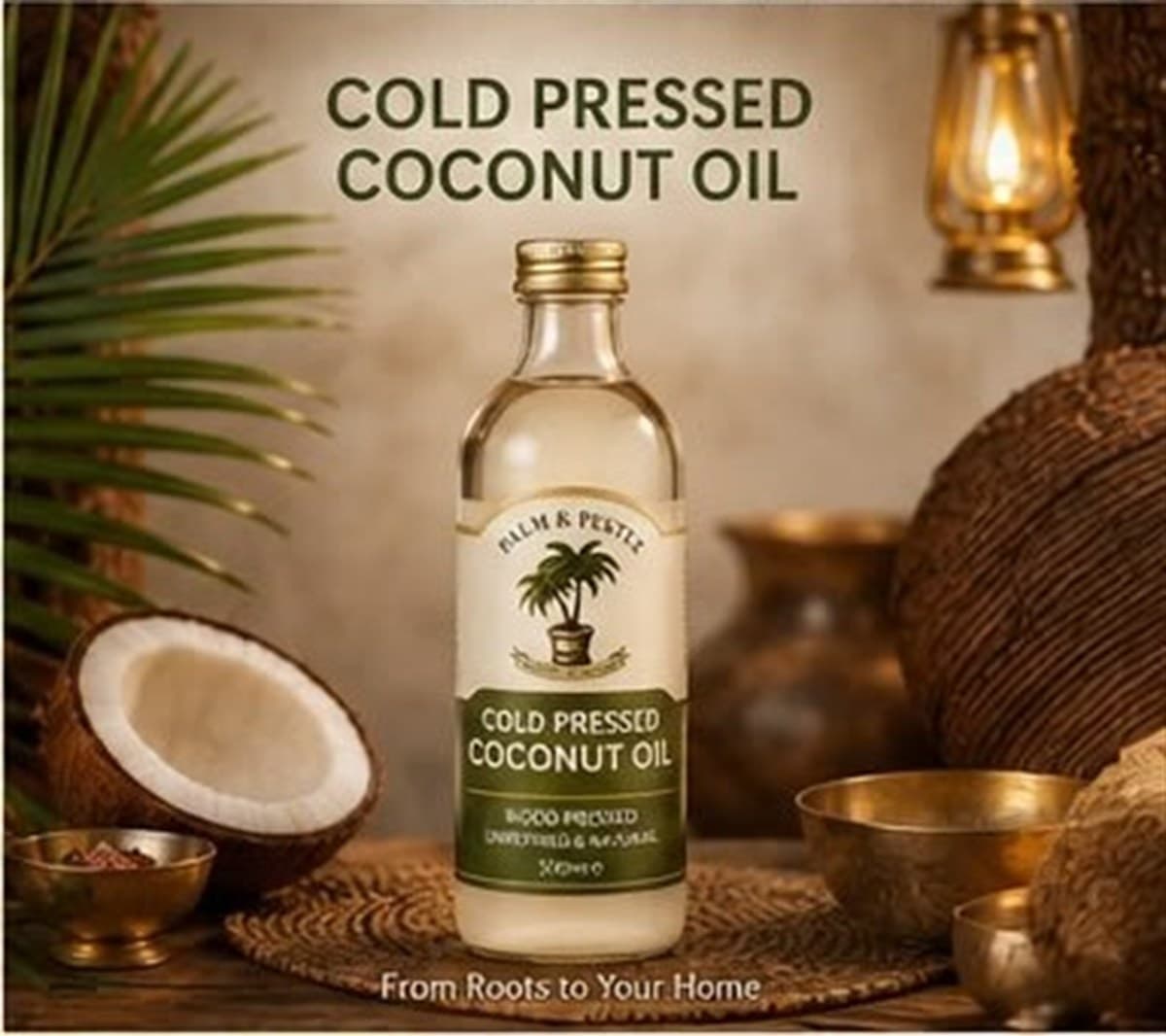
Our cold-pressed sesame oil and cold-pressed coconut oil are both made this way. Slow. Cold. Nothing added.
How refined oil is actually made
Refined oil starts with the same seed and ends with something quite different. The seed is heated to high temperatures (150–200°C) and pressed with an expeller — much faster than a ghani, but that heat destroys many of the delicate compounds.
Then it goes through more steps: solvent extraction with hexane to squeeze out the last drops, neutralisation with sodium hydroxide, bleaching with fuller's earth or activated carbon, and deodorising by superheated steam. Each step strips something out. The end product is pale, odourless, and consistent — perfect for a factory bottle, but a shadow of what was in the seed.
What the aroma tells you
This is the fastest test. Open a bottle of real cold-pressed sesame oil and you will smell the seed — deep, nutty, almost smoky. Open a bottle of refined "gingelly" oil and you will smell almost nothing.
The aroma is the flavour and the nutrition combined. Both were destroyed by heat and chemistry. If the label says cold-pressed but the oil is pale and odourless, the label is wrong.
When each is appropriate
Cold-pressed oil is what you want for every dish where the oil itself is a flavour — tadka, sauté, curries, salads, drizzle, raw finish, oil bath. It has a lower smoke point (~175°C for sesame, ~232°C for groundnut), so for extremely high-heat deep frying you might reach for a refined neutral oil.
In practice, almost no Indian home cooking runs hot enough to exceed the smoke point of cold-pressed oil. Refined oil is a convenience for industrial-scale frying, not a home-kitchen necessity.
A short buying checklist
Look for these on the label: "cold-pressed" or "wood-pressed" or "ghani-pressed" (each is a stronger claim than the last). Ideally single-ingredient — just the oil, nothing else. Amber or dark bottle to protect from light. Small batches, dated on the bottle.
Look for these on the oil itself: aroma (should smell distinctly of the source seed), colour (deeper than refined, sometimes with visible sediment — that is the seed), and price (real cold-pressed oil costs more because the process is slow — if it costs the same as refined, something is off).