A South-Indian kitchen is built on five ingredients that most kitchens outside the region have quietly stopped keeping. Some were replaced by industrial substitutes; some were never introduced. Adding all five back into a modern pantry changes what you cook — quietly and permanently.
One · Palm jaggery
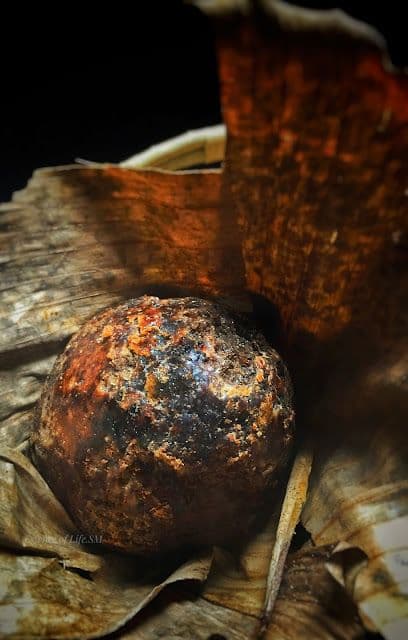
Palm jaggery is the sweetener that South-Indian households used before white sugar arrived. Made from the sap of the palmyra palm, boiled the same day. Dark, mineral-rich, distinctly aromatic. Used in filter coffee, warm milk drinks, payasam, ghee-jaggery digestives.
Start here. It is the single ingredient that most changes how everyday food tastes.
Two · Hill garlic
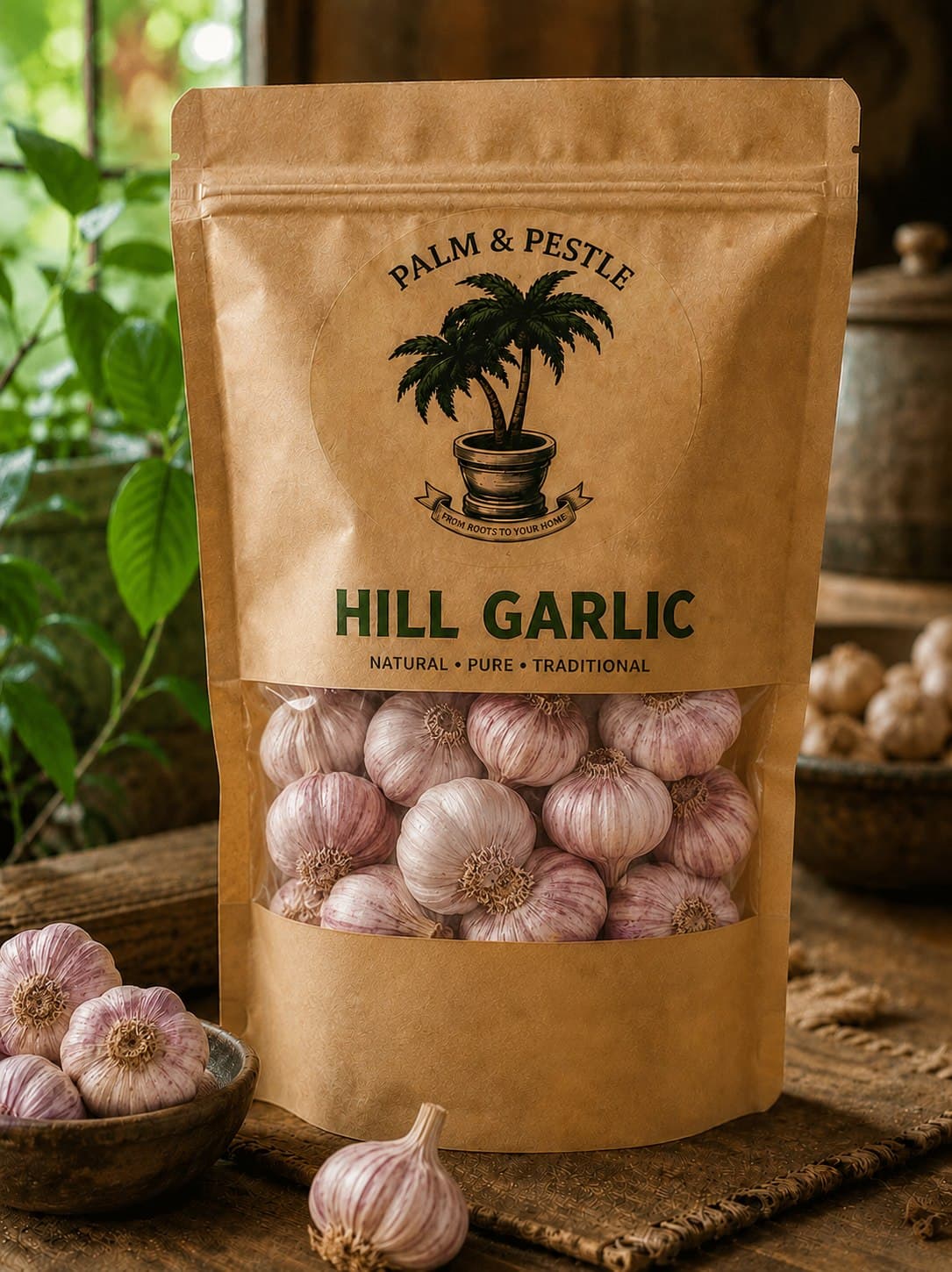
Hill garlic is the heirloom variety grown at altitude in the Nilgiris and adjacent hills. Small pink-purple bulbs, several times more potent than commercial garlic, prized in Ayurveda for its allicin content.
Use two cloves where you would use one commercial. In rasam and sambar tadka, it changes the base flavour of the dish.
Three · Cold-pressed sesame oil
Nallennai, literally "the good oil". The traditional South-Indian cooking oil — dark, aromatic, ghani-pressed from black sesame. Used for tadka, poriyal, salad drizzle, oil bath.
The switch from refined "gingelly" oil to real cold-pressed sesame oil is the second-biggest quality lift a South-Indian kitchen can make.
Four · Real coconut milk
Coconut milk that is made of coconut. Not "coconut extract, water, xanthan gum, guar gum, stabilisers". The base of every Kerala fish curry, Chettinad chicken, appam batter, avial, and payasam.
Once you cook with the real thing, industrial coconut milk in a curry tastes flat and slightly plastic. There is no going back.
Five · Heritage millets
Heritage millets — foxtail (thinai), kodo (varagu), little millet (samai). The ancient grains South-Indian households ate before rice took over. High in fibre, low on the glycemic index, gluten-free.
Rotate them through the week instead of rice. Millet dosa, upma, pongal, payasam — everything works.
Building a starter shelf
If you are starting from zero, buy the Trio Gift Box — palm jaggery, jaggery powder, and hill garlic — plus a 500ml bottle of cold-pressed sesame oil and a 400ml bottle of coconut milk. That is a functional South-Indian starter pantry for under ₹2,500.
Add heritage millets when the coming-soon range launches next month. That completes the five.
What to expect after a month
Filter coffee tastes different — smokier, more mineral. Rasam tastes different — deeper, warmer. Payasam tastes different — richer, less one-note sweet.
And your grocery bill for pantry staples has crept up a little. But it has moved back the money you were quietly spending on industrial versions of the same things, and moved it toward small farmers who kept the crop alive when everyone else stopped growing it.