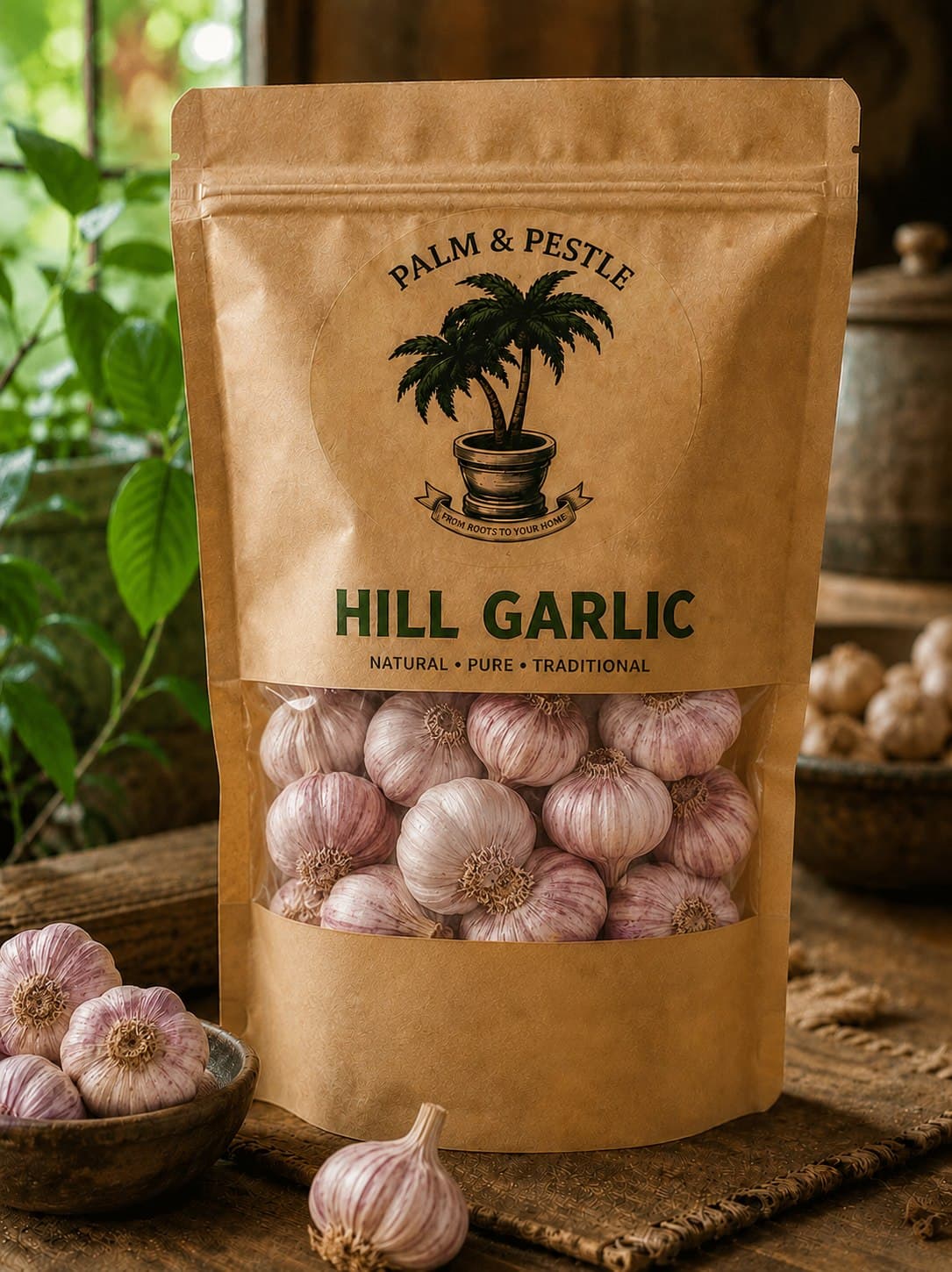
The first time you see a bulb of hill garlic you will be a little confused. It is a fraction of the size of the garlic at your grocer, wrapped in papery pink-purple skin instead of white, and if you rub it between your fingers you can already smell it. This is what garlic used to be.
What makes hill garlic different
Hill garlic is an heirloom variety grown at altitude — the Nilgiris, Kodaikanal, Yercaud — in small terraced plots that have been kept alive by farmer families for generations. Commercial garlic is bred for size, uniformity, and shelf life. Hill garlic has never been bred that way.
What it lacks in bulb dimension it more than makes up for in allicin — the compound that gives garlic its bite, its aroma, and every therapeutic claim ever made about it. Our hill garlic carries several times the allicin content of a comparable weight of commercial garlic.
The allicin story
Allicin is what you smell when you crush a garlic clove. It is also what does the medicinal work — anti-bacterial, cardiovascular support, anti-inflammatory. The allicin content depends on the variety and the growing conditions. Hill garlic, grown slowly at altitude, holds much more of it than the fast-grown plains variety.
That is why old South-Indian home remedies — the honey-garlic morning chew, the garlic-in-warm-ghee tadka for children with a cold — always specified "small garlic" or "hill garlic". The recipe knew what the science later confirmed.
How to use less and get more
In a rasam or a sambar tadka, use two hill-garlic cloves where you would use one commercial. Crush them with the flat of a knife rather than mincing — you want to release the allicin, not oxidise it. Add to hot sesame oil with mustard seeds and let them bloom for 15 seconds.
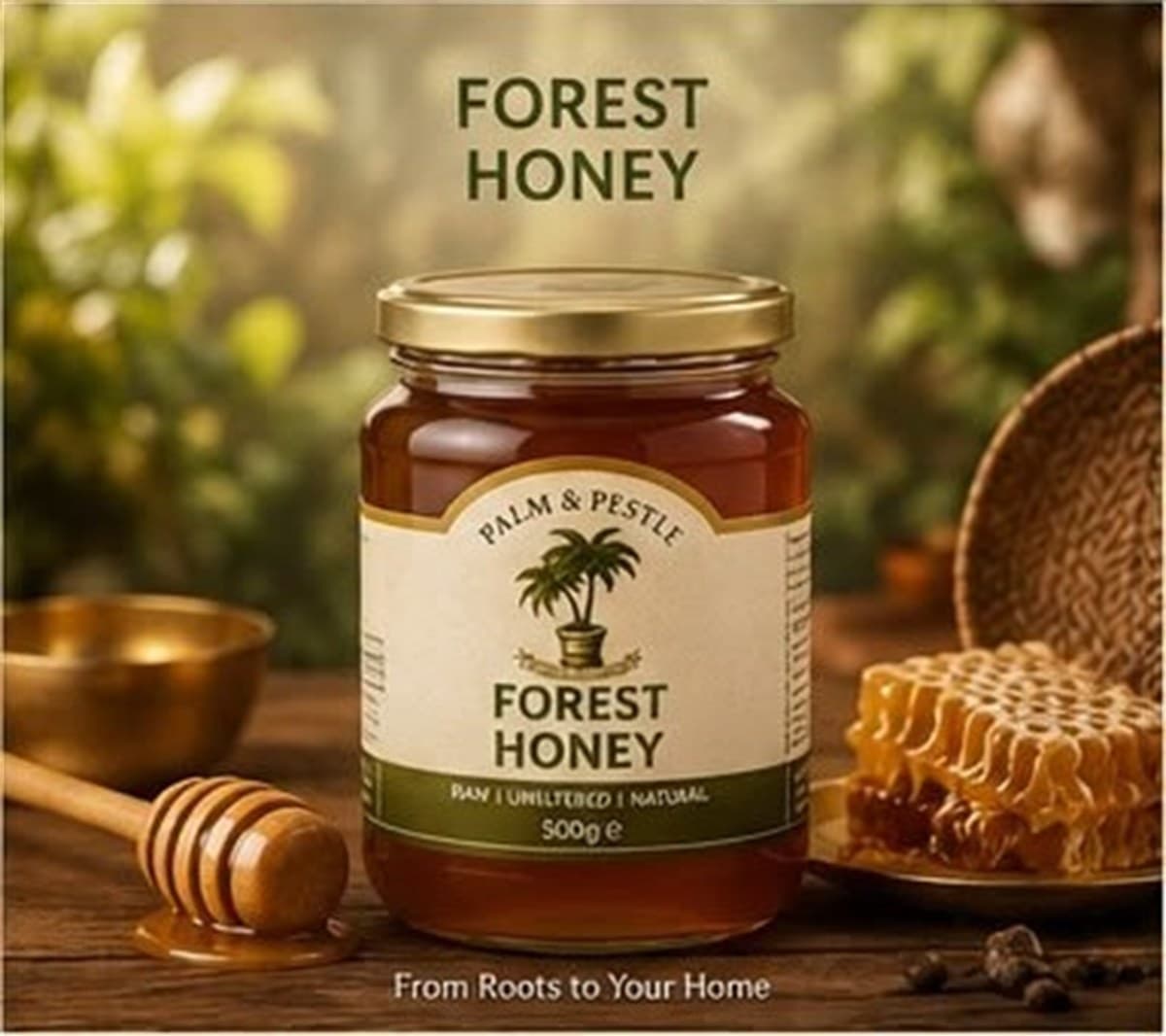
For a raw honey-garlic morning chew: one small clove, one teaspoon of raw honey, hold in the mouth for a minute, then swallow. Traditional South-Indian immunity ritual. Not for children under one (never raw honey), fine from twelve months onwards.
When commercial garlic is fine
This is not an argument against commercial garlic — it is an argument for using both. For a large pan of biryani where you need a whole head of garlic, commercial is more practical. For a small tadka where two cloves have to carry the flavour of a whole dish, hill garlic wins every time.
Keep both on the counter. Reach for the small purple bulb when the recipe needs the punch.
Storage matters
Never refrigerate hill garlic — cold air encourages sprouting and softening. A terracotta pot or a mesh bag in a dry cabinet is ideal. Kept properly, it lasts 4–6 months.
You will know when it is time to use one up — the papery skin loosens and the aroma sharpens. That is peak allicin.