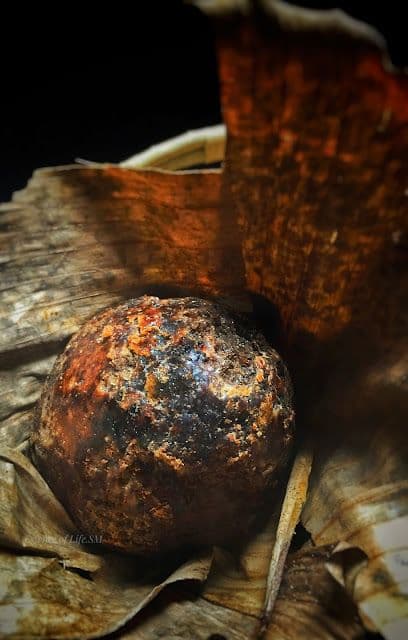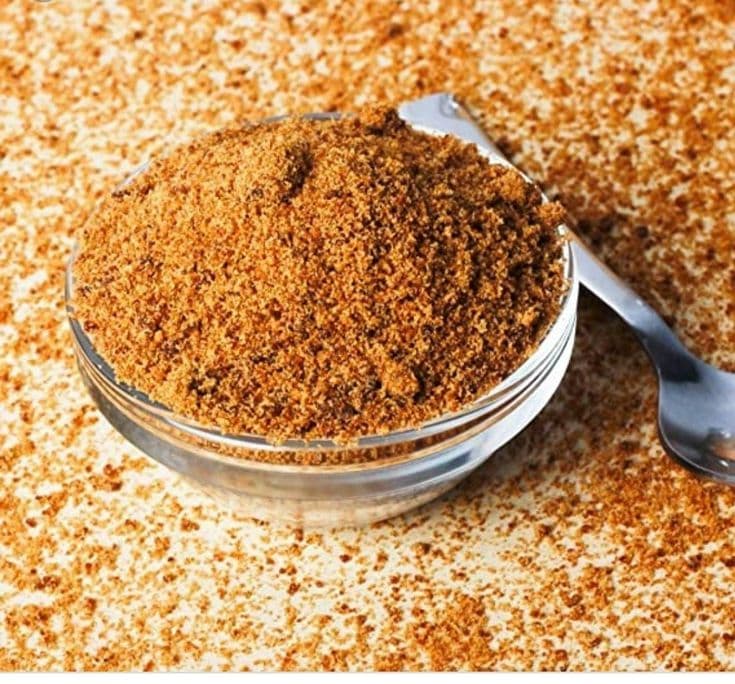
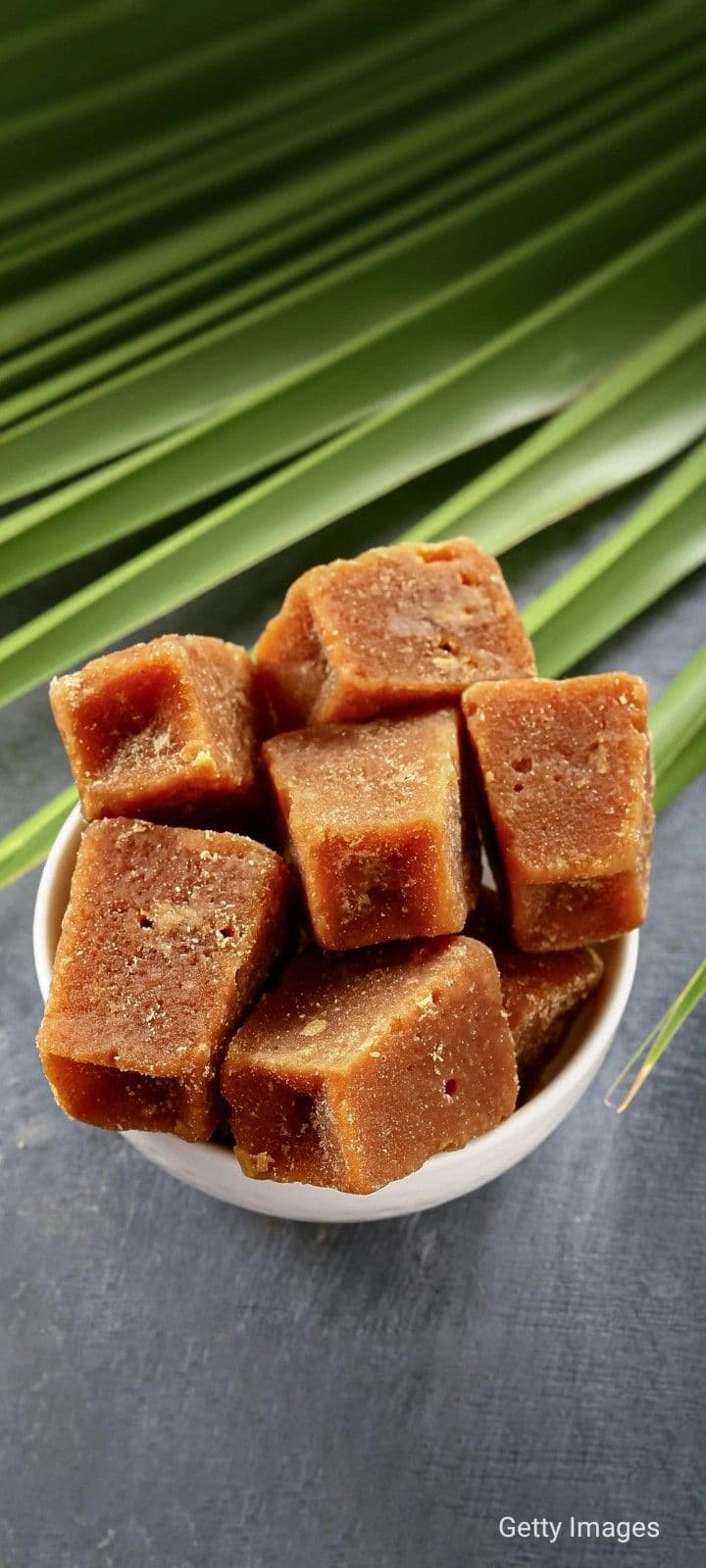
The words are used interchangeably, but the two are different products from different plants. Both are made by boiling down a sweet plant liquid, both keep more minerals than white sugar, and both look reasonably similar in a jar. What is not obvious from a jar: they taste and behave differently in a recipe.
Different sources
Palm jaggery comes from the sap (neera) of the palmyra palm, tapped fresh at dawn and boiled the same day. It grows in the drylands of Tamil Nadu and Andhra. The tree is tapped, not cut — it lives on for decades.
Sugarcane jaggery comes from freshly-pressed sugarcane juice, boiled down slowly in shallow iron kadhais with a natural clarifier — bhindi (okra) sap, in our case. It grows across Tamil Nadu, Karnataka, Andhra and Maharashtra.
Mineral profiles
Palm jaggery is richer in iron, potassium, magnesium and calcium. It also has a slightly lower glycemic index (~35 vs ~45 for cane jaggery), which is why Ayurveda classifies it as the more "warming" of the two.
Sugarcane jaggery has a similar mineral profile but at slightly lower concentrations. It is also more widely available and more affordable.
When to use which
Palm jaggery — anywhere the mineral edge and smoky depth are welcome. Filter coffee, chai, warm-milk drinks, payasam with jaggery as the primary flavour, ghee-jaggery balls, warming winter tonics.
Sugarcane jaggery — the everyday pantry sweetener. Laddoos, chikkis, sweets where the jaggery is a background player, baking, one-for-one sugar swap in recipes that would taste too intense with palm jaggery.
A quick tasting note
Take a small piece of each. Warm them slightly by holding between your fingers for a minute. Bite. Palm jaggery has a distinctly caramel-with-smoke aroma and a deeper, almost salty mineral finish. Sugarcane jaggery is more straightforwardly sweet — closer to what your palate expects.
Neither is "better". They are different registers of the same instrument.
The old rule of thumb
South-Indian grandmothers keep both. Palm jaggery lives in a small tin next to the coffee. Sugarcane jaggery lives in a larger jar next to the sugar. The right question is not which one to use — it is when to reach for each.